
Menu
Tooth Removal Cost Near Me in Nagpur (2026) — Teeth Extraction Price & Expert Care
Finding a transparent and affordable tooth removal cost near me is the first step toward resolving persistent dental pain and preventing the spread of oral infections. At Dr. Nikshis Orthodontic Centre and Dental Implant Clinic, we utilize advanced surgical technology in 2026 to ensure that every extraction is performed with sub-millimeter precision.
WHAT IS TOOTH REMOVAL AND WHEN IS TEETH EXTRACTION NECESSARY?
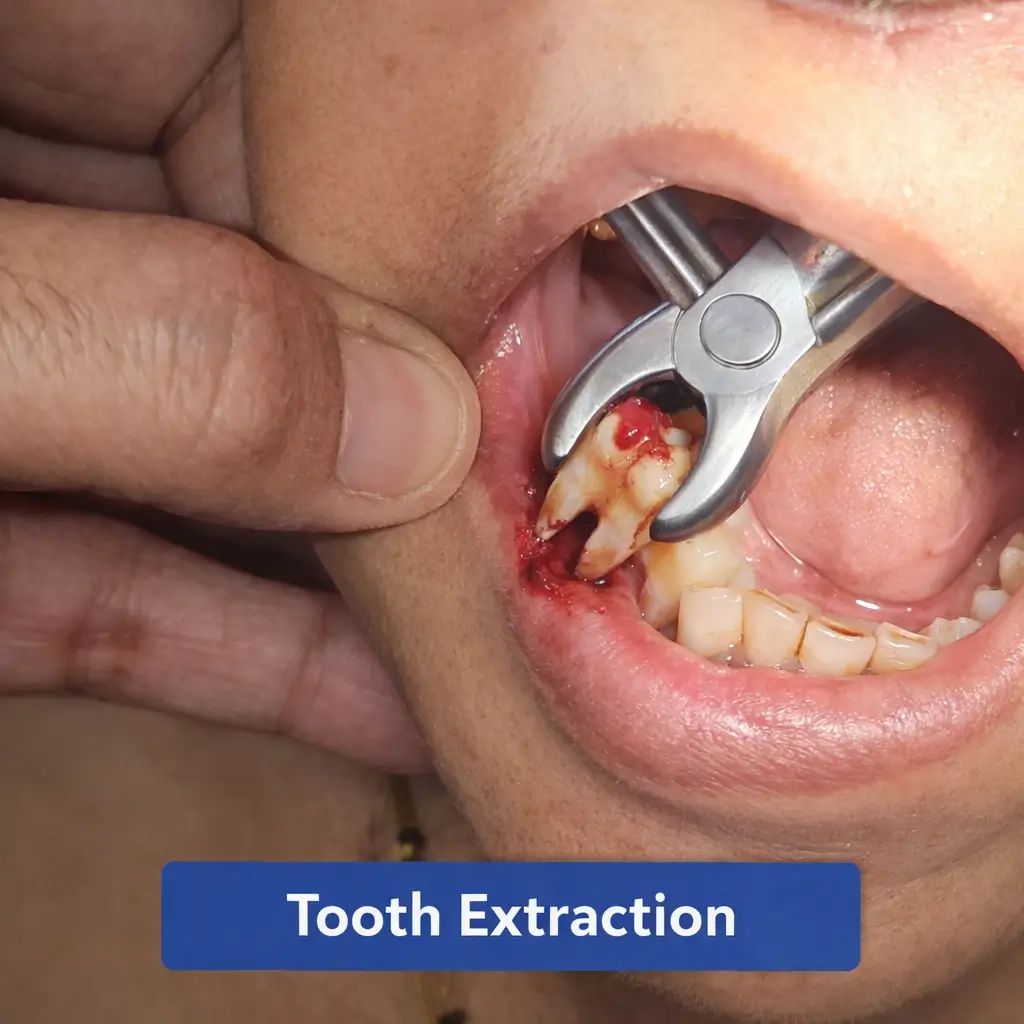
Tooth removal (extraction) is the clinical removal of a tooth from its socket in the jaw. It is medically necessary when a tooth is irreparably damaged by decay, trauma, severe infection, or when it threatens surrounding teeth and tissues.
Extractions are also part of managing some orthodontic, periodontal, and emergency conditions. These indications and emergency management are outlined by national dental authorities and clinical guidelines. (WHO/IDA clinical guidance and dental emergency resources support these indications.)
Common reasons a tooth may need extraction include severe tooth decay that has destroyed most of the tooth structure, advanced gum disease weakening the bone that supports teeth, dental trauma from accidents or injury, overcrowding before orthodontic treatment, and impacted wisdom teeth that cannot fully erupt.
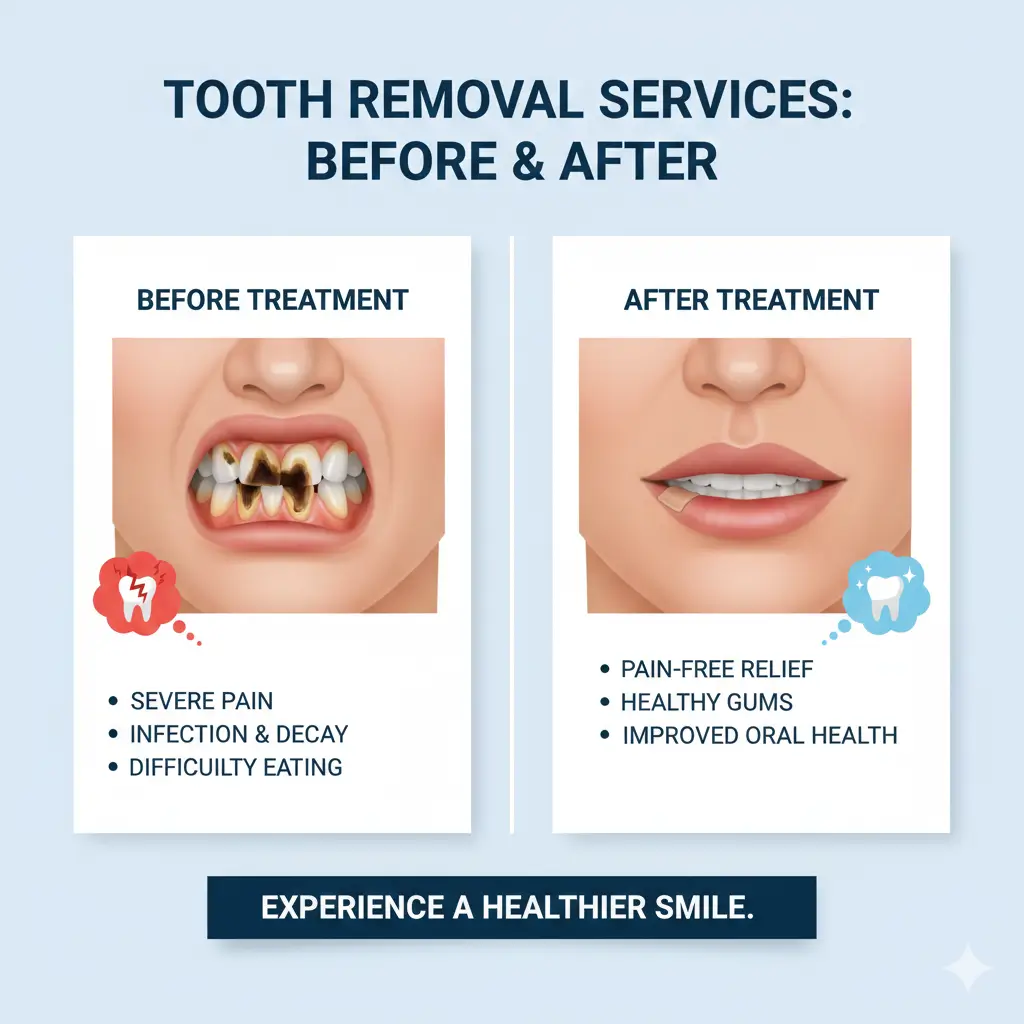
WHO NEEDS TEETH EXTRACTION? 7 SIGNS YOU SHOULDN'T IGNORE
Knowing when to seek professional evaluation can prevent complications and more complex treatments later. Here are seven warning signs that may indicate you need teeth extraction near me:
SEVERE OR PERSISTENT TOOTH PAIN
Constant, throbbing pain that does not respond to over-the-counter painkillers often indicates deep infection or advanced decay. If the tooth structure is too damaged, extraction may be the only way to eliminate the source of pain.
ADVANCED GUM DISEASE (PERIODONTITIS)
When periodontal disease progresses and destroys the bone supporting the tooth, the tooth becomes loose and unstable. Extraction prevents the infection from spreading to neighboring teeth and bone.
IMPACTED OR PARTIALLY ERUPTED WISDOM TEETH
Wisdom teeth that do not have adequate space to fully emerge can become trapped beneath the gums, causing pain, swelling, infection, and damage to adjacent teeth. Removal is often recommended to prevent future complications.
OVERCROWDING BEFORE ORTHODONTIC TREATMENT
Orthodontists sometimes recommend extracting one or more teeth to create space for proper alignment. This is a common step before fitting braces or aligners.
FRACTURED OR BROKEN TOOTH BELOW THE GUM LINE
Teeth broken at or below the gum line from trauma or severe decay cannot be repaired with standard dental work. Surgical extraction becomes necessary to remove the remaining root fragments.
DENTAL ABSCESS OR INFECTION NOT RESPONDING TO TREATMENT
An abscessed tooth that does not heal after root canal therapy or antibiotics poses a risk of spreading infection to the jaw, face, or bloodstream. Extraction eliminates the infection source.
Types of Tooth Removal Procedures: Simple vs Surgical Extraction
Procedures are selected based on tooth accessibility and complexity:
Simple extraction — used when the tooth crown is visible. The dentist loosens the tooth with elevators and removes it with forceps under local anaesthesia.
Surgical extraction — required for impacted, fractured, or buried teeth. It may involve small incisions, bone removal, or sectioning the tooth. Local anaesthesia is usually used; sedation or general anaesthesia may be offered for complex cases.
Clinical sources describe technique differences and indications for surgical approaches. (Clinical procedure guides and surgical extraction overviews.)
The Health Benefits of Timely Teeth Extraction in Nagpur
Timely extraction can:
Remove sources of chronic pain and infection.
Prevent spread of dental infection to adjacent teeth and soft tissues.
Facilitate orthodontic treatment planning or prosthetic rehabilitation.
Reduce risk of systemic complications in medically vulnerable patients when infection is controlled.
Health authorities emphasise early management of oral infections to lower broader health risks. (WHO oral health & emergency care context.)
What to Expect During Teeth Extraction Near Me (Step-by-Step)
When you visit our Nagpur clinic for an extraction, we begin with digital X-rays to map the root anatomy. We use advanced local anesthetics to ensure the site is completely numb, meaning you will feel pressure but no sharp pain during the removal. In 2026, most extractions at our facility are completed in under 20 minutes, followed by the placement of a sterile gauze pack to initiate the healing process.
Why Choose Dr. Nikshis Orthodontic Centre and Dental Implant Clinic Nagpur for Teeth Extraction in 2026
Specialist-led care: experienced clinicians with predictable clinical outcomes.
Evidence-based protocols: we follow IDA/WHO-aligned infection control and extraction procedures.
Transparent pricing: itemised estimates after clinical exam and radiographs.
Comfort & safety: options for local anaesthesia, sedation, and strict sterilisation practices.
Aftercare & follow-up: clear recovery plans and emergency contact support.
Choosing a reputable clinic reduces the risk of complications and ensures responsible replacement planning when needed.
Tooth Removal Myths — Busted!
Let’s separate facts from fiction with evidence-based answers.
Myth
“Extractions always cause long-term problems.”
Fact
When clinically indicated and performed correctly, extractions relieve pain and infection. Proper replacement planning restores chewing function and smile aesthetics.
Myth
“You must fast for days after extraction.”
Fact
Follow your dentist’s advice. Soft foods are usually fine soon after the procedure. Hot liquids should be avoided for a short period.
Myth
“Extraction is always more costly than other options.”
Fact
Immediate extraction may cost less than prolonged failing tooth care. Long-term replacement costs should be considered in treatment planning.
Factors That Affect Your Tooth Removal Price
Price varies depending on:
Procedure complexity: impacted vs visible tooth.
Tooth location: molars generally cost more than front teeth.
Imaging needs: additional radiographs or CBCT increase cost.
Anaesthesia & sedation: conscious sedation or GA raises fees.
Clinic category & clinician experience: specialist oral surgeons or high-end clinics charge more.
Associated treatments: if extraction is followed immediately by implant placement or bone grafting, costs rise.
These are common, verifiable cost drivers across India and local clinics. (IDA guidance and clinic price pages corroborate these factors.)
Do’s and Don’ts After Tooth Removal — Fast Recovery Tips
Proper aftercare reduces complications, prevents dry socket, and supports faster healing.
Do
- Bite gently on gauze for the first hour to control bleeding.
- Use cold compresses to reduce swelling during the first 24 hours.
- Begin gentle rinsing with warm saline after 24 hours (unless advised otherwise).
- Take prescribed pain medication and antibiotics as directed.
Don’t
- Avoid smoking, spitting, or using a straw for at least 24–48 hours.
- Do not skip follow-up visits if pain, fever, or excessive bleeding occurs.
Tooth Removal Charges: Teeth Extraction Cost in Nagpur (2026)
Tooth extraction costs vary based on complexity, technology, and the type of clinic. Below is a general pricing guide to help you understand what to expect.
How costs are structured: Clinics may quote separately for consultation, X-rays, the extraction procedure (simple or surgical), anaesthesia or sedation, medications, and follow-up visits. The Indian Dental Association provides a procedural charge framework that many clinics reference.
Simple Extraction (Anterior Tooth)
₹1,000 – ₹3,000
Basic removal of visible front teethSimple Extraction (Molar Tooth)
₹2,000 – ₹4,000
Back teeth requiring more effortSurgical / Impacted Wisdom Tooth
₹4,000 – ₹8,000+
Complex extractions or impacted teethAdditional costs may include: sedation, CBCT imaging, or antibiotic therapy.
Public teaching hospitals may charge much less but often have longer waiting times. Private clinics offer faster appointments with variable pricing.
Book Your Appointment Now For Tooth Removal
Facing a Dental Emergency? We provide safe, quick, and affordable teeth extraction in a sterile environment. Let our experts handle your discomfort with care.
EXCELLENTTrustindex verifies that the original source of the review is Google. Orthodontic treatment for my daughter started by Dr. KamblePosted onTrustindex verifies that the original source of the review is Google. Teeth alignment done from Dr. Nikshi.Posted onTrustindex verifies that the original source of the review is Google. Braces. Treatment of. my daughter done by Dr. NikshiPosted onTrustindex verifies that the original source of the review is Google. Started metal braces treatment from Dr. NikshiPosted onTrustindex verifies that the original source of the review is Google. Started my braces journey from Dr. Nikshi. Nice experience.Posted onTrustindex verifies that the original source of the review is Google. Thank you sir for flawlessly performing a complex dental treatment. Highly recommended.Posted onTrustindex verifies that the original source of the review is Google. Mi sirankade last year 1st time aali hoti. Majya eka danta la keed lagli hoti Ani pus pan ala hota. Sirani maji pus ani daad kadhun takli karan ki te khup kharab jaali hoti. Ani dusrya dantala root canal karun tyala vachawla. Mi gavi hoti tar eka dusrya dr. Kade dusra dant kadla but te ata pan dukhat aahe .mag mi parat dr.nikshi kade ale ani sirani mala pain free treatment kela ani ek implant pan takun dila.Posted onTrustindex verifies that the original source of the review is Google. I went to this doctor for a dental cap, and it turned out to be a big mistake. The cap was wrong and it completely messed up my bite. I was in constant pain and even started getting headaches because of it. Instead of fixing the problem, the doctor ignored my complaints and never changed the cap. My teeth condition actually got worse after the treatment. I suffered for a long time and finally had to go to another dentist to get it corrected. This experience was extremely stressful. I am sharing this review so that other patients are aware and take a second opinion before getting treatment here..worst treatment...worst doctor...awful knowledge...just basic things he can do...don't go here plz.Posted onTrustindex verifies that the original source of the review is Google. Braces treatment done by Dr. Nikshi.Posted onTrustindex verifies that the original source of the review is Google. I visited Dr.Nikshi's Clinic for my TMJ (jaw joint) problem, which was causing pain and discomfort for a long time. The doctor explained the cause in a very clear and simple way and guided me properly about treatment and precautions. I felt comfortable and confident during the consultation. I am happy with the treatment and would definitely recommend this dentist to anyone facing TMJ issues.
FAQ's For Before Choosing Tooth Removal Clinic in Nagpur
Extraction costs vary by tooth and complexity. Typical private clinic ranges in Nagpur for 2026 are roughly ₹1,000–₹4,000 for simple extractions and ₹4,000–₹8,000+ for surgical or impacted extractions. Extra charges may apply for CBCT imaging, sedation, or immediate prosthetic work. Public dental hospitals sometimes provide subsidised services at much lower fees but may have longer waits. A precise quote requires an exam and X-rays so the clinic can provide an itemised plan. (IDA fee framework and local clinic listings reflect these ranges.)
The extraction procedure itself is performed under local anaesthesia and is typically not painful. You may feel pressure during the procedure. Post-operative discomfort, swelling, and mild pain are normal and usually controlled with prescribed analgesics. Sedation options are available for anxious patients. Follow post-op instructions to minimise complications such as dry socket. If severe or worsening pain occurs after 48–72 hours, contact your dentist for review.
Initial soft tissue healing usually occurs within 7–10 days; the socket is covered by granulation tissue in about a week. Complete bone remodelling takes several months. Pain and swelling generally reduce significantly after 3–4 days. Follow-up at 7–14 days is common to assess healing and remove sutures if placed. Individual healing varies by age, systemic health, smoking status, and the extraction’s complexity.
After extraction, start with soft foods and liquids for 24–48 hours; avoid hot, spicy, hard, or crunchy foods that could disrupt the clot. Do not use straws or smoke for 48 hours to reduce dry socket risk. Gradually reintroduce normal foods as comfort permits, and follow your dentist’s specific dietary advice. Proper nutrition supports healing.
Yes. Surgical (impacted or broken tooth) extraction is more complex, may require longer operative time, possible bone removal, and sometimes sedation — all of which raise costs compared with a routine simple extraction. Your dentist will explain why a surgical approach is required and provide an itemised estimate before treatment.
Replacing an extracted tooth is recommended when function, aesthetics, or adjacent tooth stability are affected. Options include a dental implant, fixed bridge, or removable partial denture. Timing depends on healing and bone status; implants may be placed immediately, early, or delayed following bone healing. Each option differs in cost, invasiveness, and long-term outcomes — discuss with your dentist for a personalised plan.